265. Eros and Thanatos, Part 8: Romantic Love
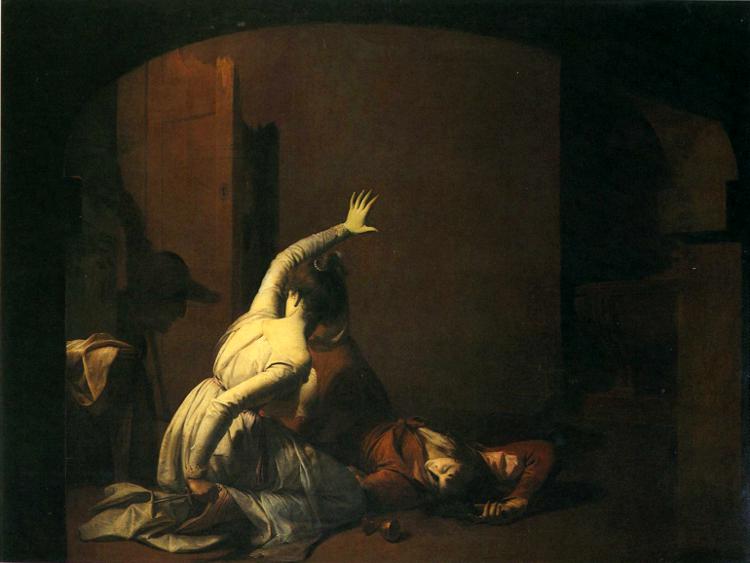
Joseph Wright, Romeo and Juliet: The Tomb Scene (c. 1790)
In the seven previous posts in this series we have seen ways in which Eros (love) can be connected to Thanatos (death). Here I want to add a few insights that can be gleaned from romantic love.
The romantic love which emerged in the context of the aristocracy of the middle ages is not the romantic love of contemporary society with its silly romcoms and atmospheric candlelit dinners. It is a form of erotic love insofar as the lovers seek something they think will complete them, namely, each other. But, due to certain prohibitions (familial, political, class-based, religious, racial, etc.), their love is perceived to be impossible from the start. However, these prohibitions, far from discouraging the lovers, generate an intense passion at a distance which results in longing, risky adventures, secret meetings, letter writing, and so on. In many cases the lovers die rather than live in a world where they must remain apart. But should the obstacles be overcome—if the lovers can indeed possess one another with no further difficulties as in a non-controversial marriage—then their love ends since it was contingent on the distance. Thus we can say that romantic love ends—as in terminates—in marriage. And this shows how diametrically opposed romantic love is to duty, social norms, law, religion, and indeed anything other than the pure, spontaneous passions of the heart which, while certainly exciting as far as story telling goes, are bound to be irrational, unpredictable, and dangerous to the lovers and those that oppose them. The classic romantic love stories of Abelard and Heloise, Tristan and Isolde, and Romeo and Juliet exemplify these characteristics, as do plenty of modern tales like the one told in the film The Graduate.
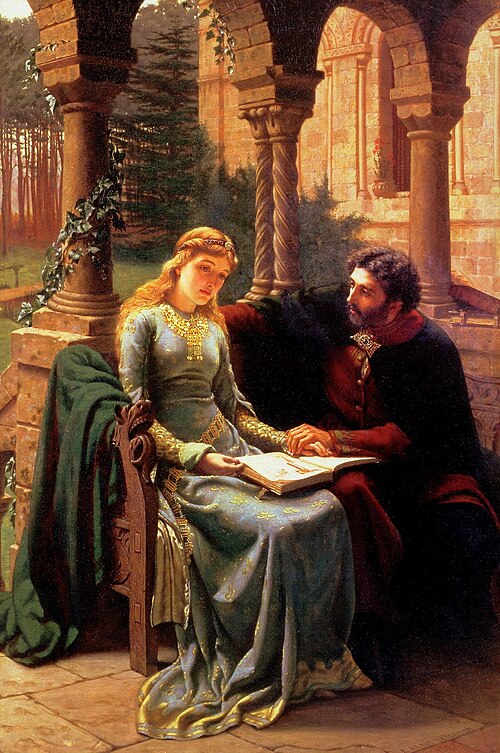
Edmund Leighton, Abelard and his pupil Heloise (1882) Abelard appears to be doing a bit more than tutoring his niece! He will eventually get castrated for his forbidden love affair.
So here we have a form of love that flourishes because of the threat of its death and which dies should that threat be overcome: a strange Eros/Thanatos relation for sure. Naturally, this leads to a paradox: the lovers are willing to face great odds and suffer tremendously even though they don’t really want to be together. Is the passion really for the chase? Is what appears so serious really some elaborate game? Perhaps one that offers them a way to feel alive in a world that is all too often dead as appears to be the case with Benjamin in The Graduate? Or could it be that, as Denis de Rougemont has claimed in his work Love in the Western World, the dark secret of romantics is that they are in love with death rather than life? Perhaps Robert Wagoner offers a more plausible option in his book The Meanings of Love when he writes: “But if this is so, why is it the almost universal testimony of lovers that they “never felt so much alive” as when they were in love? The answer, I think, is that this is when they are most keenly aware of the full reach of their freedom. They do not so much want death as defy it. Death, too, can be surpassed” (65). But whatever the case may be, one thing is for sure: the Eros and Thanatos relationships of romantic love are not always easy to understand and perhaps even the effort to try to understand them is, well, not very romantic.
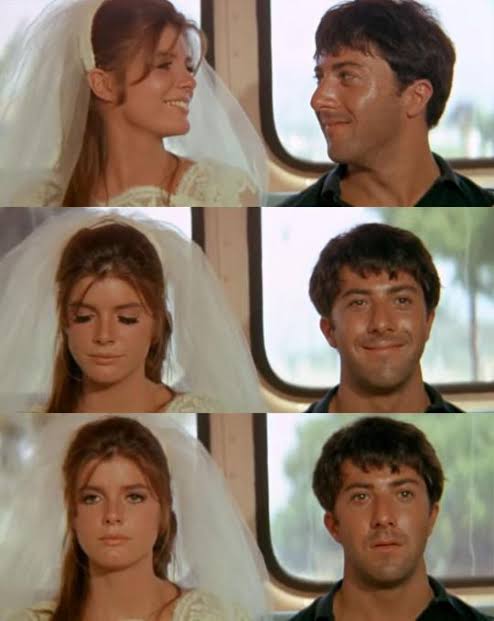
Romantic love ends if things work out! The Graduate offers the perfect romantic love ending.
For my other posts in this series, go here.
For my posts on love, go here.
For my post on romanticism more broadly understood, go here.