263. John Dewey on Wisdom as Conscientiousness
The word ‘philosophy’ literally means ‘love of wisdom’ (philia=love and sophia=wisdom). Thus a philosopher can be understood as someone who loves wisdom and who seeks it via the activity of philosophy which asks general and fundamental questions and seeks to provide well-argued answer to them.
But what is wisdom?
Many answers have been given to this question. But one answer which I think makes a lot of sense comes from John Dewey (1859-1952). Dewey was one of the towering figures in American pragmatism or that philosophy which, among other things, assesses the truth and meaning of propositions in terms of their practical application. Thus it makes sense that he connects conscientiousness to conduct: “Modern conscientiousness contains less of the idea of intellectual accomplishment, and more the idea of interest in finding out the good in conduct.” Conscientiousness can also be construed as “the formed habit of bringing intelligence to bear upon the analysis of moral relations—the habit of considering what ought to be done.” Intelligence is a general pattern of inquiry which he describes in his book Reconstruction in Philosophy as follows:
“Observation of the detailed makeup of the situation; analysis into its diverse factors; clarification of what is obscure; discounting of the more insistent and vivid traits; tracing the consequences of the various modes of action that present themselves; regarding the decision reached as hypothetical and tentative until the supposed consequences which led to its adoption have been squared with actual consequences. This inquiry is intelligence.”
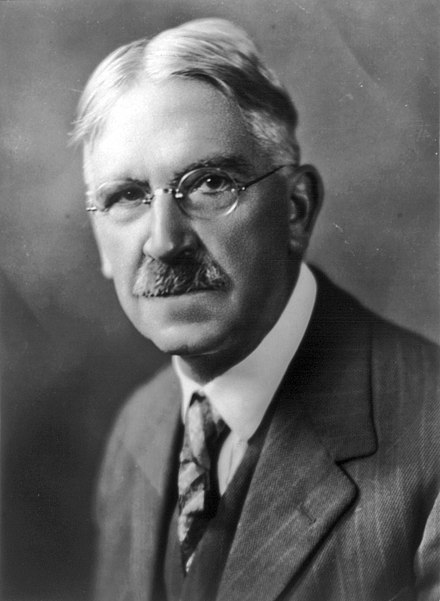
John Dewey (1859-1952)
It is crucial to understand that conscientious intelligent inquiry is about discovery, pursuit, and effort rather than achievement, possession, and rest. It is always on the outlook for something better. As such, conscientiousness is the most important of all our habits due to its power to develop other habits. For we will exercise our capacities if we are in the habit of being deeply concerned about what is to be done. And we will be less inclined to act out of routine if we are interested in discovering something new. Thus conscientious people “do not allow themselves to be unduly swayed by immediate appetite and passion, nor to fall into ruts of routine behavior.” I’ll close with this passage in which Dewey identifies wisdom with conscientiousness and claims it is the nurse of all virtues:
“Wisdom, or (in modern phrase) conscientiousness, is the nurse of all the virtues. Our most devoted courage is in the will to know the good and the fair by unflinching attention to the painful and disagreeable. Our severest discipline in self-control is that which checks the exorbitant pretensions of an appetite by insisting upon knowing it in its true proportions. The most exacting justice is that of an intelligence which gives due weight to each desire and demand in deliberation before it is allowed to pass into overt action. That affection and wisdom lie close to each other is evidenced by our language; thoughtfulness, regard, consideration for others, recognition of others, attention to others.”
Go here for my other posts on Dewey.
Go here for my series on pragmatism and tragic conflict.
Go here for my posts on William James.