253. Robert C. Soloman on Freud’s Sophisticated Theory of Mind
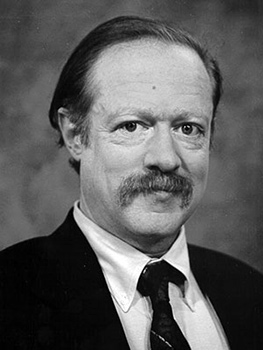
Robert C. Soloman (1942-2007)
Chapter 9 of Robert C. Soloman’s book From Hegel to Existentialism (New York: Oxford, 1987) is “Freud’s Neurological Theory of Mind.” In this chapter, Soloman argues that Freud’s theory, first explored in his unpublished “Project for a Scientific Psychology” (1895), was far ahead of its time and, as a result, has been consistently misunderstood by supporters and critics alike who accuse him of incoherently postulating both unconscious mechanical/non-intentional drives and conscious goal-driven/intentional mental states in his model and, in general, committing various category mistakes (applying properties appropriate to one category, like physics, to another where such properties may not make sense, like psychology).
Solomon shows how Freud’s model wisely dropped any commitment to finding neuroanatomical grounds for his psychological structures (for example the id, ego, and superego) knowing the limitations of science at the time (limitations that are, of course, still very much with us). Instead, he decided to focus on the concept of energy, which he labeled as Q (standing for quantity of neuronal excitation), and thought of this energy as capable of taking on both mechanical and intentional properties. Solomon claims that Freud’s terms for Q such as discharge, cathexis (allocation of mental or emotional energy to a person, object, or idea), hypercathexis, tension, resistance, quantity, and so on are terms of a “topic neutral” language that, rather than implying any kind of dualism between mind and brain, express different ways the one neutral fund of nervous system energy can manifest. So “both psychological and neurological processes are essentially functions of an overall system and cannot be treated—even in theory—as isolated processes” (154).
Solomon argues this ingenious appeal to the neutral energy of the nervous system can be an empirical hypothesis and is apparently a well-confirmed one (to me, this allows for at least the possibility that Freud’s private clinical work with the talking cure could be consistent with publically accessible brain research as neuropsychoanalysis maintains). Solomon also claims this novel approach preserves Freud’s desire for a unity of science that avoids incoherent dualisms without requiring specific neuroanatomical correlations to proceed with research. He concludes: “Karl Pribram has praised Freud’s Project for its sophistication even by today’s standards in neurology. I would like to add that it is sophisticated by today’s standards in philosophy as well. As in many other instances, a work of this outstanding genius of our century has been abused for “naivete” only because it was too radical to be appreciated in its own time” (155).
This fascinating theory of mind might not be correct. But if it is, it might save Freud from common objections to his work such as blatant incoherence and unfalsifiability. And thinking it through might open up some overlooked options for those of us who think about the mind and its relation to the brain today.
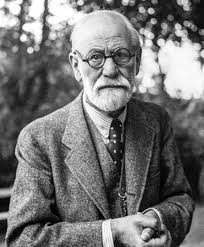
For my various posts on Freud, go here.