258. Kant on Beautiful Forms as English Gardens

Immanuel Kant (1724-1804)
Introduction
There are two common positions when it comes to judgments of beauty. On the one hand, many think that beauty is “in the eye of the beholder”: judgments of beauty are nothing but the subjective evaluations of those who behold and are therefore opinions with no objective reference whatsoever. On the other hand, many believe beauty is a property independent of our opinions which can ground judgments that some people, places, and things are indeed more beautiful than others.
However, the philosopher Immanuel Kant offers us a third option in his influential book on aesthetics Critique of judgment (1790). He claims that judgments of beauty are partially subjective and partially objective. In this post I want to explore this alternative which tends to be overlooked in debates about beauty. I also want to emphasize a criterion he employs when discussing the objective side of beauty, namely, that beautiful forms must be inexhaustibly interesting and always new to us. Such forms, he suggests, are akin to an English garden whose minimal imposition of order supports, rather than removes, the wild richness of nature. What is so intriguing about this criterion is that it prevents beauty from being reduced to any kind of concept or measurable quantity such as the golden ratio. I think this approach, in allowing an infinite diversity of beautiful forms, is quite promising despite certain potentially problematic implications which I’ll briefly consider.
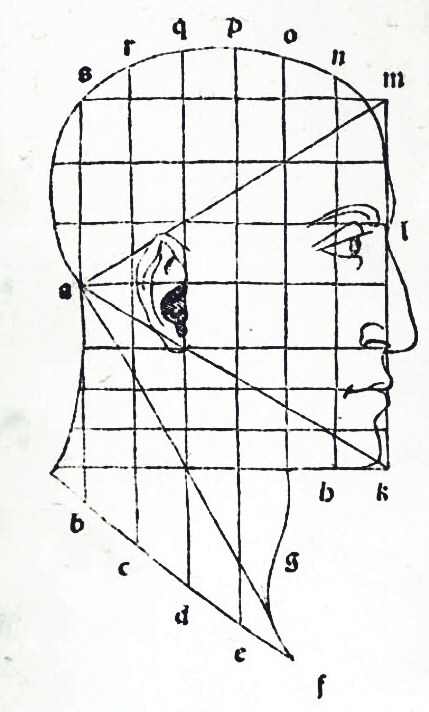
Leonardo da Vinci’s illustration of a human head. The Golden Ratio (approximately 1:1.618) is often held to be an objective measure of beauty. Kant would disagree!
The Subjective Side
According to Kant beauty is an experience and it is something we feel. But when we formulate a judgment that something is beautiful – an aesthetic judgment – there a set of conditions he thinks distinguish such a judgment from theoretical judgments about truth and falsity and practical judgments about morality. When Kant describes judgments of beauty from the subjective side of the experience, he offers three necessary conditions:
(1) Judgments of the beautiful must be disinterested.
This means that when we make the judgment that something is beautiful, we make the judgment (a) without concern with truth and falsity; (b) without concern with satisfying our desires or appetites by using the object; and (c) without concern with the moral goodness of the object. In an interested judgment, we are concerned with whether the thing exists or not, whether we can realize our desires for it or not, and whether the thing is good or not. But in a disinterested judgment all our attention is on the beautiful thing itself rather than our interests.
(2) Judgments of the beautiful must be universal.
When we judge something to be beautiful we don’t think our judgment is just an opinion or something “personally agreeable” as Kant says. Rather, we think our judgment is universal: beautiful for everyone, everywhere, at all times. Kant is not saying people do, in fact, agree about what is beautiful. He is only saying that our judgments of the beautiful entail the belief that others should judge as we do.

I took this photo of the Austrian Alps which struck me as beautiful. I think you should judge it to be beautiful as well!
(3) Judgments of the beautiful are necessary judgments.
But how can we expect that the things we take to be beautiful will necessitate others to see things the same way? Kant thinks we presuppose this necessity when we rigorously debate about what is and what isn’t beautiful – a plausible view. But what can make sense of this necessity if aesthetic judgments are about our feelings which, so it seems, are idiosyncratic? Kant answers this question with reference to what he calls the categories of the understanding. Kant famously argued that our minds are not passive receivers of sense data but actively structure incoming data to make our experience what it is. He refers to this ability to actively shape sense data as our “common sense.” This common sense plays a role in shaping the world as we know it in science. But it also allows people to feel the same way in the presence of certain beautiful forms. Thus it is by virtue of sharing the same mental operating system that we can expect others to necessarily agree with our judgments of beautiful things provided that our judgments are disinterested and focus solely on their form.
The Objective Side
But what kind of form? Well, when Kant describes the experience of beauty from the objective side he states, in a rather perplexing way, that beautiful forms have “purposiveness without purpose.” What he means by this seemingly contradictory statement is that beautiful things, rather than having their worth by being a means to purposes external to them, are purposes unto themselves: they have inherent value. For example, saying a guitar is beautiful because it can accomplish a variety of goals external to it such as creating sounds is not, for Kant, an appropriate use of the term. But if we admire the guitar for its colors, shapes, materials, etc. then we are making a disinterested judgment about its inherently valuable form. When our minds interact with such a form we experience what Kant calls a “free play of the imagination” in which we are free to consider possibilities dwelling within the work itself rather than those connected to external practical concerns. This form of aesthetic liberation is a unique and satisfying way to experience of our freedom as rational agents.
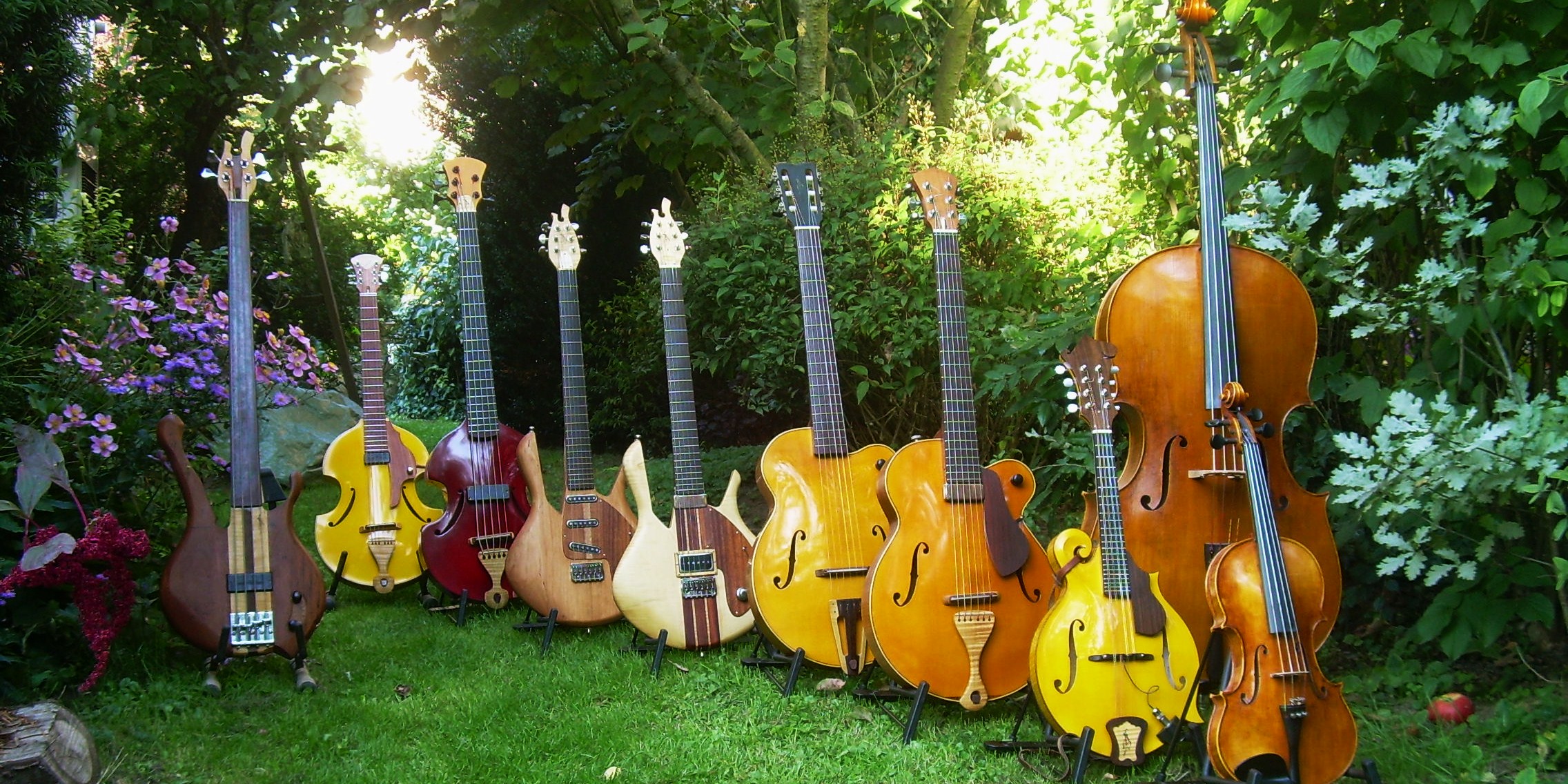
Works by Bruce Hernandez: instruments to be played…but also appreciated for their own sake!
Beauty as an English Garden
Kant offers a few helpful clarifications of this rather vague notion. For example, he says beautiful forms must be harmoniously unified and found interesting for their own sake. But the clarification I find most helpful and interesting is this: they must always appear new and inexhaustible to us. There is an eternal freshness and a vitality in beautiful things that allow us to return to them over and over again. Consider this passage from the Critique of Judgment which makes an interesting reference to English gardens:
“Thus English taste in gardens, and fantastic taste in furniture, push the freedom of imagination to the verge of what is grotesque the idea being that in this divorce from all constraint of rules the precise instance is being afforded where taste can exhibit its perfection in projects of the imagination to the fullest extent. All stiff regularity (such as borders on mathematical regularity) is inherently repugnant to taste, in that the contemplation of it affords us no lasting entertainment. Indeed, where it has neither cognition nor some definite practical end expressly in view, we get heartily tired of it. On the other hand, anything that gives the imagination scope for unstudied and final play is always fresh to us. We do not grow to hate the very sight of it. Marsden, in his description of Sumatra, observes that the free beauties of nature so surround the beholder on all sides that they cease to have much attraction for him. On the other hand he found a pepper garden full of charm, on coming across it in mid–forest with its rows of parallel stakes on which the plant twines itself. From all this he infers that wild, and in its appearance quite irregular beauty, is only pleasing as a change to one whose eyes have become surfeited with regular beauty. But he need only have made the experiment of passing one day in his pepper garden to realize that once the regularity has enabled the understanding to put itself in accord with the order that is the constant requirement, instead of the object diverting him any longer, it imposes an irksome constraint upon the imagination: whereas nature subject to no constraint of artificial rules, and lavish, as it there is, in its luxuriant variety can supply constant food for his taste.”

Beautiful things can be new to us because they are not formulaic, derivative, and predictable as so many works with made with prefixed concepts, regular patterns, ratios, and so on are. Kant writes, “regularity in the shape of constraint is to be avoided as far as possible.” Here I think of my trip to the gardens of Versailles in France where I encountered some very impressive feats of symmetry indeed:
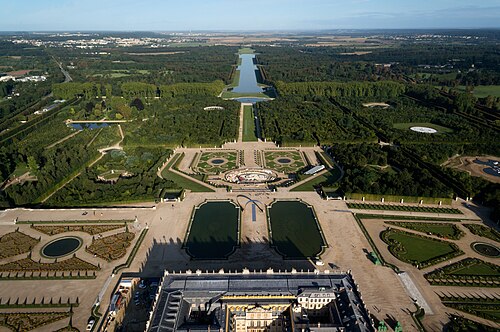
Jardins du château de Versailles (photo by ToucanWings)
Here is the plan of the gardens from 1746 which shows the rigorous geometry involved:
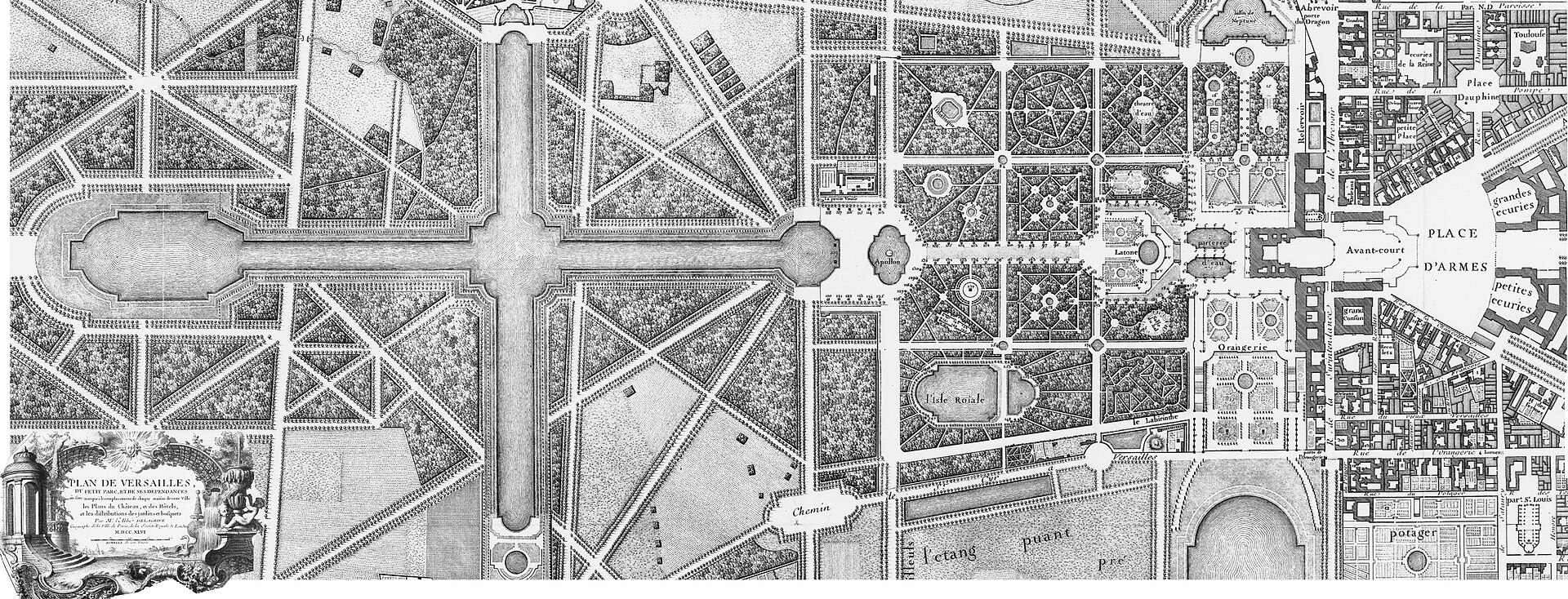
Naturally these highly structured gardens are incredible. But I’m not so sure they would always be new to me. On the other hand, I’m more confident that English gardens could avoid predictability not by presenting something completely wild but by imposing just enough order to allow the rich diversity of nature to present itself. Wouldn’t a stroll down this path activate our common sense and generate a vitalizing free play of the imagination every time?
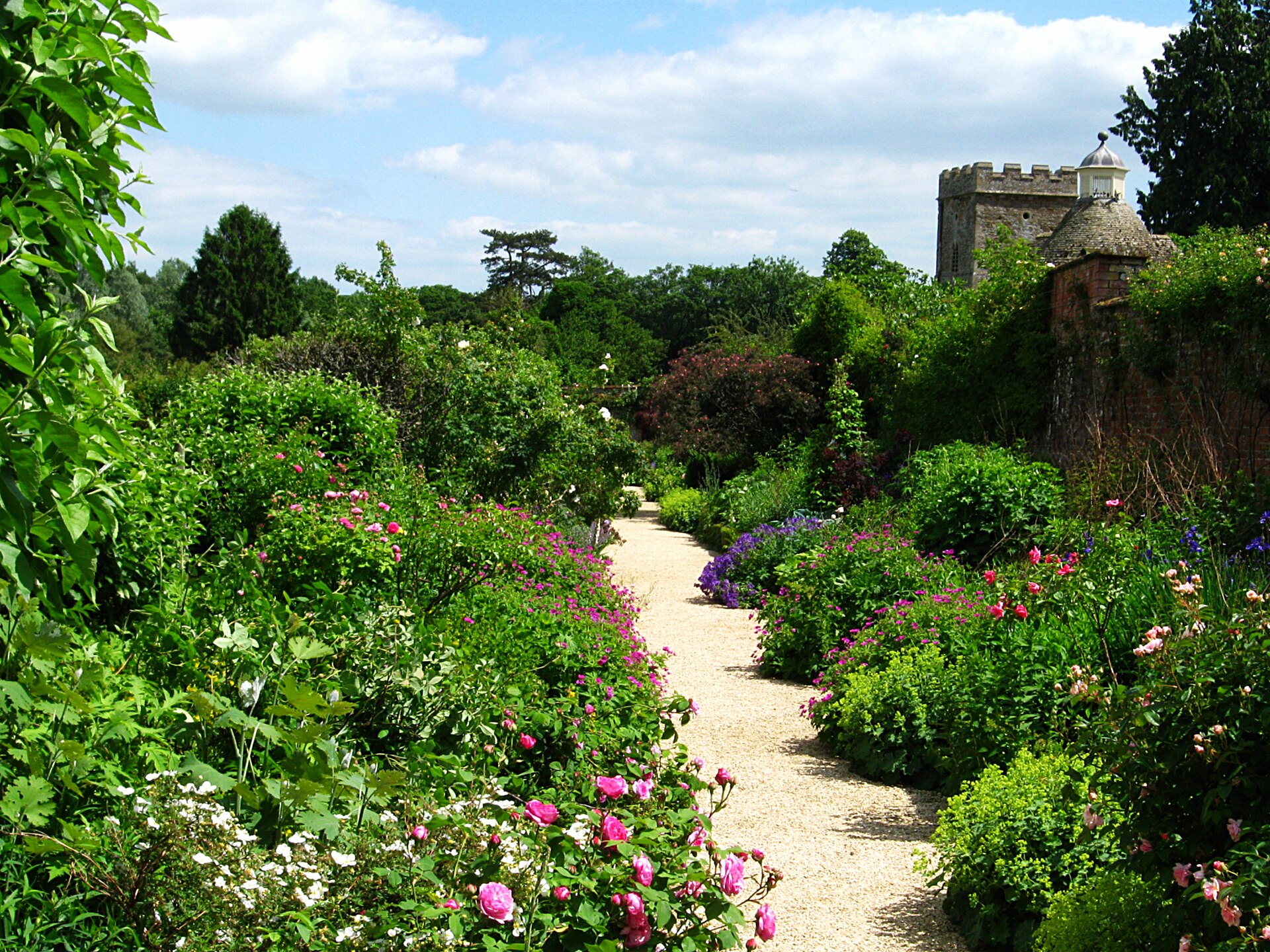
Rousham House Gardens in Oxfordshire (photo by Jason Ballard)
I certainly felt like the English Garden in Munich could sustain my interest forever as I strolled through it this past summer:

The Englischer Garten in Munich Germany (photo by Dwight Goodyear)
Japanese gardens employ a similar approach of imposing only enough order to allow nature to appear in its rich diversity and asymmetry. For example:
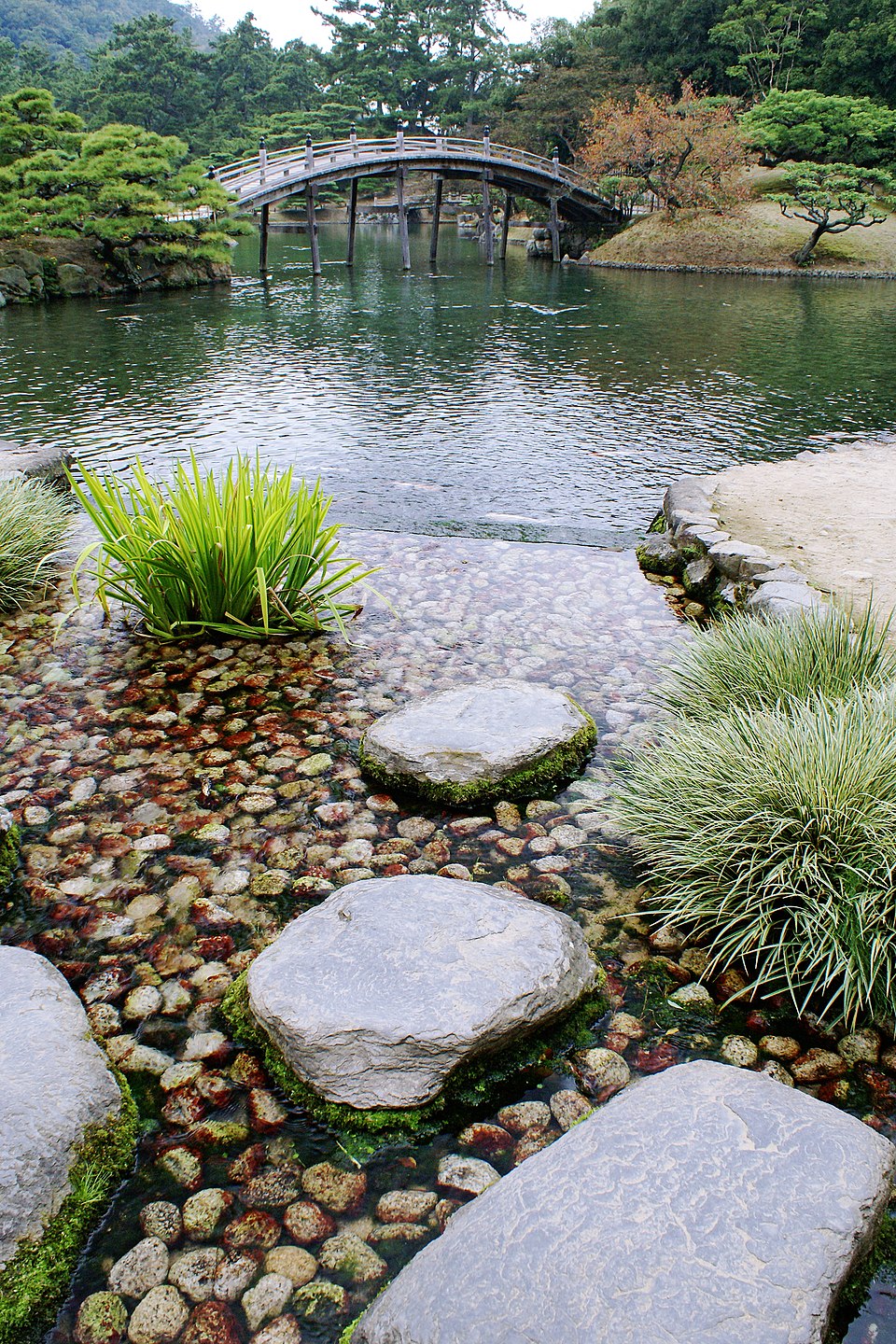
Ritsurin Garden in Takamatsu, Kagawa Prefecture, Japan (Photo by 663highland)


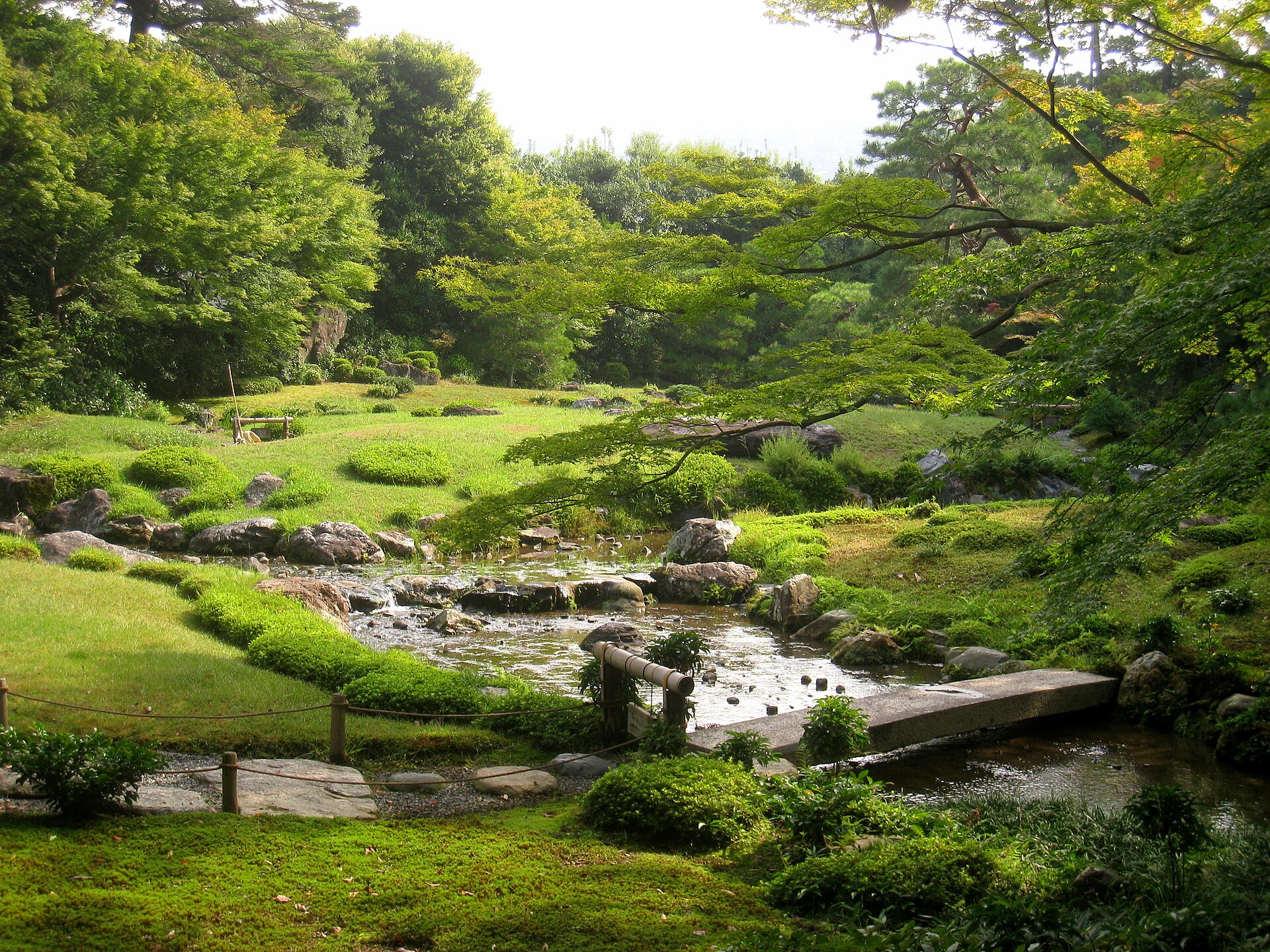
Murin-an, 8 Nanzenji-kusakawa-cho, Sakyo-ku, Kyoto, Japan (photo by Daderot)
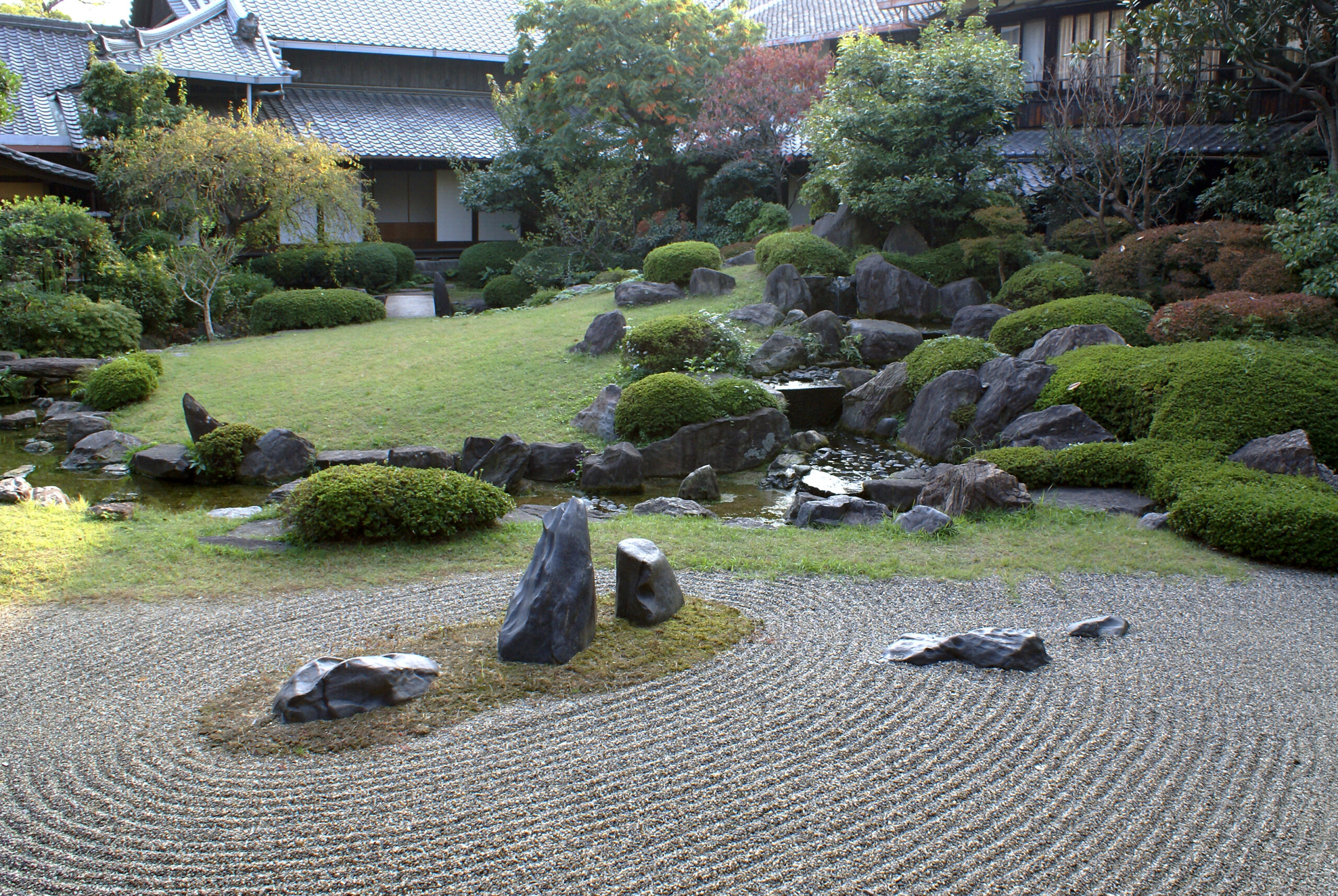
Shitennō-ji Honbo Garden in Osaka, Osaka prefecture, Japan (photo by 663highland)
Beauty as an English Garden
So anything we take to be beautiful rather than personally agreeable will have, like an English garden, a rich diversity presented with a degree of order. These conditions help explain why we take beautiful things to be inherently valuable. And they can be met by things very different from actual gardens. For example, I find this glass cube by Larry Bell which, as he says, “reflects, absorbs, and transmits light at the same time” to be very beautiful. Bell is sometimes referred to as a minimalist and that can be true given the minimal materials involved. But the effects that flow from the materials, which are ever changing and unique to every person who encounters them, are rich indeed as you can imagine from this example:

Larry Bell, Untitled Cube (1993)
Many of Rothko’s works, such as this color field painting No. 14 from 1960, come to mind as well:
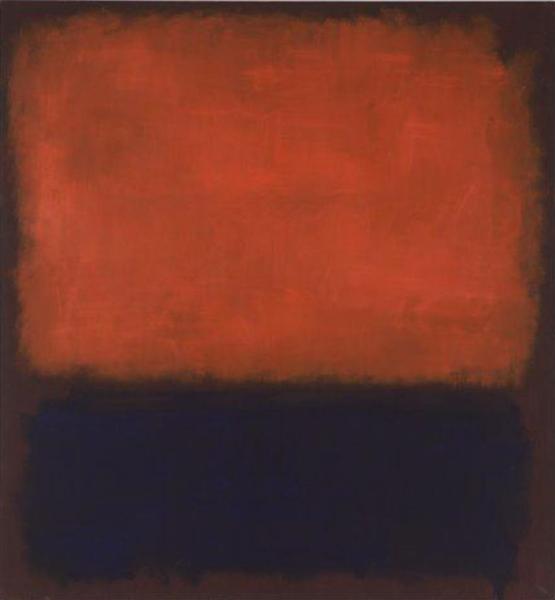
And we can think of plenty of other examples that lack the wild richness of a garden in terms of a vast multitude of parts but still, somehow, are always new to us. Water, for example, can be beautiful as can a simple gem stone or face that we can look at forever. But these things are not exactly akin to a wild garden physically speaking. So I think the focus of Kant’s interesting metaphor should be the inexhaustibility which can be applied to many diverse things. And this, I think, is a virtue of his theory given the rich diversity of beauty in the world.
Implications and Questions
Now, it might be thought that these considerations, however interesting, are still too vague and threaten to undermine his universality criterion which, as we saw above, requires us to make a gesture towards consensus guided by the belief that others should agree with us. But I think this gesture can be accomplished by pointing people to the conditions under which we had an experience. I can tell others to look at something intersubjectively available – say a landscape, the starry heavens, or artwork that imitates these things – so that they can make their own reflective judgments about them. And the necessity for such a projected consensus is grounded in our shared rational and imaginative nature which cuts across nationality, class, race, gender, party affiliation, and so on.

Caspar David Friedrich, Two Men Contemplating the Moon (ca. 1825-30)
Of course, we can question this appeal to our shared nature. In his Aesthetics Daniel Herwitz notes that our experiences of the sublime are “generated by our cultural positions, not simply our shared humanity” and points out that “even in Kant’s time Hume will have understood another way that persons regarded works of art and beautiful things: as commodities to be enjoyed, as civilizing instruments, things to be discussed in men’s clubs. Whose heaven is starry-eyed and about the moral law within, and whose an occasion for a good port and cigar?” (76). So we need to ask: how much does culture play a role in aesthetic experience? If cultural differences overwhelm our shared nature then perhaps Kant’s effort to make the sublime “universally communicable” will fail. And we might even go further and deny we have a shared nature in the first place.
In response to these concerns, I think Kant would point out that the condition for the possibility of all aesthetic communication and debate is access to a shared nature of some kind. Since we do have such communication and debate then an appeal to a shared nature is warranted. And we can also take an empirical approach and point out that diverse people in diverse times have had similar aesthetic experiences. Roger Scruton makes this point in his book Beauty: A Very Short Introduction (Oxford, 2011): “[T]he word ‘aesthetic’ was introduced in the eighteenth century; but its purpose was to denote a human universal…although the vision of nature as an object of [aesthetic] contemplation may have achieved special prominence in the eighteenth-century Europe, it is by no means unique to that place and time, as we know from Chinese tapestry, Japanese woodcuts, and the poems of the Confucians and Basho” (54).
But even if these responses are convincing we will have to accept that his criterion of inexhaustibility simply can’t be made conceptually explicit. It can’t be applied like an algorithm. And therefore it can’t help us make a predictable science of beauty that would enable us to know if x is beautiful simply by studying the measurements of x second hand. This, for some, is a reason against it. But for others it is a reason to embrace it since it leaves us with a vision of beauty that includes singularity, uniqueness, and mystery – things which, however elusive, can serve as revitalizing antidotes to all the predictable, derivative, and boring things in the world.
Whenever we are in the presence of beauty it is as if we are wandering in an English garden where, because everything is new to us, we are new as well. We can invite people to walk with us, we can share this beauty, and we can even philosophize about it as Kant himself does. But we cannot put it in any conceptual box: it will remain free and, perhaps, that is for the best.

Vincent Van Gogh, Shoes (1888): revealing inexhaustible richness in common objects!